We are proud to welcome a distinguished lineup of keynote speakers whose work has significantly advanced our understanding of life history, developmental science, and human behavior. Each speaker brings a unique perspective shaped by years of pioneering research, interdisciplinary collaboration, and global impact. Below, you’ll find their biographies, showcasing the remarkable breadth and depth of their contributions. These individuals will guide us through some of the most pressing and thought-provoking conversations in the field today.

Linda Richter, PhD
University of the Witwatersrand (Wits)
Prof. Linda Richter (PhD) is a distinguished developmental psychologist and research professor at the University of the Witwatersrand (Wits) in Johannesburg, South Africa. She is the Lead Principal Co-Investigator of the Birth to Forty (Bt40) Study, the largest and longest-running birth cohort study on the African continent, which has followed over 3,000 individuals since 1990.
Prof. Richter’s work has profoundly influenced global policy and practice in early childhood development, adolescent health, and family systems. She has served as an advisor to major international organizations, including the WHO, UNICEF, and the World Bank, and has authored more than 300 scientific publications. Her contributions to longitudinal research have shaped the understanding of how structural and familial factors impact health and development across the life course.
A passionate advocate for evidence-based social policy, Prof. Richter’s keynote will explore the power of longitudinal data to illuminate life trajectories and inform interventions that promote equity and resilience.

Dana Charles McCoy, PhD
Prof. Dana Charles McCoy (PhD) is a Professor of Human Development and Education at the Harvard Graduate School of Education. A developmental psychologist by training, her research centers on how poverty and inequality affect children’s cognitive, social-emotional, and neurobiological development – particularly in the early years of life.
Prof. McCoy’s work spans more than 30 countries, where she collaborates with global partners to develop and evaluate interventions aimed at improving early childhood development and education. She is a co-investigator on several large-scale longitudinal studies and a core contributor to the Global Scale for Early Development (GSED), an initiative supported by UNICEF and the WHO to standardize the measurement of child development across diverse contexts.
With a deep commitment to equity-driven research, Prof. McCoy’s keynote will highlight how developmental science, global collaboration, and rigorous longitudinal methods can be leveraged to create meaningful systems change for children and families around the world.
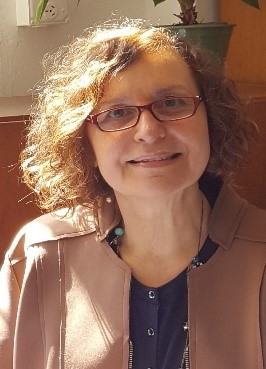
Alicia Matijasevich Manitto, PhD
Prof. Alicia Matijasevich Manitto (PhD) is an Associate Professor in the Department of Preventive Medicine at the University of São Paulo Medical School, Brazil. Originally trained in Medicine at the Universidad de la República in Uruguay, with specialization in Pediatrics and Neonatology, she went on to earn both her MSc and PhD in Epidemiology from the Federal University of Pelotas and completed postdoctoral training at the University of Bristol. Her work spans life-course epidemiology, maternal and child health, and population mental health, and she has contributed extensively to longitudinal cohort studies and international public health research
Prof. Matijasevich’s keynote will highlight the value of life-course and longitudinal research for understanding how early social and health conditions shape later outcomes in mental health, child development, and family well-being. Drawing on her work in maternal and child health epidemiology, her talk will emphasize how population-based cohort data can deepen our understanding of developmental risk and resilience across the lifespan.